Emma Finucane Britain’s Record-Breaking Track Cycling Star
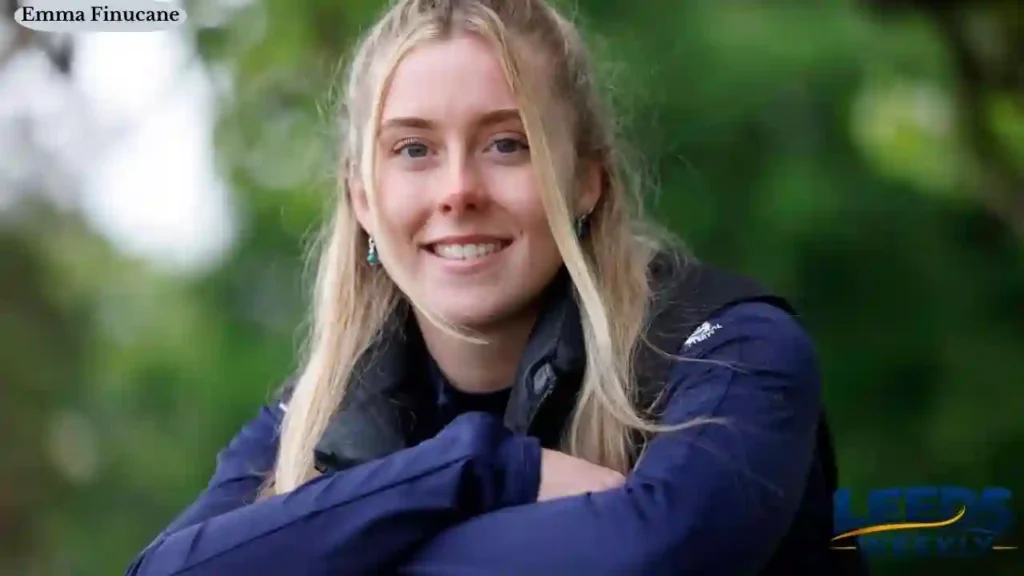
Emma Finucane is a Welsh track cyclist who has rapidly become one of the biggest names in international sprint cycling. An Olympic champion, world champion and record-breaking Commonwealth Games athlete, she has established herself as a major figure in British cycling while still being in her early twenties.
Born in Carmarthen, Wales, Finucane progressed through British Cycling’s development system before emerging at senior level. Her breakthrough world title, three-medal performance at the Paris 2024 Olympics and extraordinary four-gold campaign at the 2026 Commonwealth Games have placed her among the leading track sprinters of her generation.
Emma Finucane Quick Facts
| Detail | Information |
|---|---|
| Full name | Emma Finucane |
| Date of birth | 22 December 2002 |
| Birthplace | Carmarthen, Wales |
| Nationality | British/Welsh |
| Sport | Track cycling |
| Main disciplines | Sprint, keirin and team sprint |
| Olympic debut | Paris 2024 |
| Olympic medals | 1 gold, 2 bronze |
| Major 2026 achievement | Four Commonwealth Games gold medals |
| Partner | Matthew Richardson |
| Training base | Manchester |
British Cycling lists Finucane as being from Carmarthen and based in Manchester. She began cycling when she was eight before eventually entering the Great Britain Cycling Team pathway.
Who Is Emma Finucane?
Emma Finucane is an elite Welsh and British track cyclist specialising in sprint events. She represents Great Britain internationally and Wales at the Commonwealth Games.
Her rise has been particularly significant because women’s sprint cycling in Britain has a distinguished history. Riders such as Victoria Pendleton and Becky James set exceptionally high standards, and Finucane has emerged as one of the strongest athletes of the next generation.
Her results are already remarkable. By 2026, her record included Olympic gold, multiple world-level victories, European success and an unprecedented four gold medals at one Commonwealth Games.
Emma Finucane Cycling Journey
The Emma Finucane cycling story started far from Olympic podiums and world championship finals.
Finucane began riding at around eight years old with Towy Riders in Wales. She initially experienced several forms of cycling rather than immediately specialising as a track sprinter.
British Cycling later recognised her potential. She entered its academy programme in 2018, with coaches identifying that her physical characteristics were particularly suited to sprinting.
From Carmarthen to British Cycling
Finucane has spoken about starting on a small pink bicycle and attending cycling sessions with her family. As her results improved, recreational cycling gradually developed into a serious competitive pathway.
The move into Britain’s elite programme was significant. Track sprinting demands considerably more than simply riding a bicycle quickly: explosive power, tactical awareness, acceleration, strength and split-second decision-making all matter.
Finucane developed each of these areas while progressing through junior and senior competition.
Why Sprinting Suited Her
Finucane initially competed across different cycling disciplines, but her sprint potential became increasingly obvious.
Track sprinters need to produce enormous power over relatively short periods. Training therefore combines bicycle work with gym-based strength, explosive movements, technical preparation and tactical race practice.
That combination helped transform Finucane from a promising junior into an elite international rider.
Emma Finucane’s Breakthrough as a Cyclist
The Emma Finucane cyclist profile changed dramatically during the early 2020s.
Her appearance at the Birmingham 2022 Commonwealth Games provided an important step forward. Racing for Wales, she collected two bronze medals and demonstrated that she could compete successfully against established senior athletes.
The real breakthrough came the following year.
2023 World Sprint Champion
At the 2023 UCI Cycling World Championships in Glasgow, Finucane won the women’s individual sprint world championship.
During qualifying, she also recorded a 10.234-second flying 200 metres, which Team GB described at the time as a sea-level world record.
Winning the world sprint crown was particularly important for British cycling. She became Britain’s first women’s sprint world champion in a decade.
It also changed expectations surrounding her. Finucane was no longer simply an emerging prospect; she was a rider capable of defeating the world’s best sprinters.
European Championship Success
Finucane carried that momentum into 2024.
At the European Track Championships in Apeldoorn, she won the individual sprint title, becoming the first British woman to claim the European women’s sprint championship. She also collected silver medals in the team sprint and keirin.
That performance demonstrated something important about her development: she was becoming competitive across several sprint disciplines rather than relying on one specialist event.
The timing could hardly have been better, with the Paris Olympics approaching.
Emma Finucane at the Paris 2024 Olympics
Paris 2024 transformed Finucane from an established cycling star into an Olympic household name.
She left her first Olympics with three medals: one gold and two bronze.
| Paris 2024 event | Result |
|---|---|
| Women’s team sprint | Gold |
| Women’s keirin | Bronze |
| Women’s individual sprint | Bronze |
Her performances made her the first British woman in 60 years to win three medals at a single Olympic Games, following Mary Rand’s achievement in 1964.
Olympic Team Sprint Gold
Finucane’s first Olympic gold came alongside Sophie Capewell and Katy Marchant in the women’s team sprint.
Great Britain defeated New Zealand in the final, recording a world-record time of 45.186 seconds. The trio broke the world record repeatedly during the competition before winning Britain’s first Olympic medal—and first gold—in the women’s team sprint.
The result represented years of development within Britain’s women’s sprint programme.
Keirin Bronze
Finucane then added an individual Olympic medal in the keirin.
She finished third behind New Zealand’s Ellesse Andrews and Dutch rider Hetty van de Wouw. It gave Finucane her second medal of the Games and demonstrated that her success was not limited to the team event.
Individual Sprint Bronze
Her third medal arrived in the individual sprint.
Finucane defeated Van de Wouw in the bronze-medal contest to complete an extraordinary Olympic debut: gold, bronze and bronze.
For an athlete appearing at her first Olympics, three medals across three events represented an exceptional level of consistency.
Emma Finucane’s Historic 2026 Commonwealth Games
Finucane reached another milestone at the Glasgow 2026 Commonwealth Games.
Representing Wales, she became the first sprint cyclist to win four track cycling gold medals at a single Commonwealth Games.
Her four victories came in:
- Women’s team sprint
- Women’s individual sprint
- Women’s 1,000m time trial
- Women’s keirin
She achieved the sweep across four successive days at Glasgow’s Sir Chris Hoy Velodrome.
Team Sprint Gold
Finucane, Rhian Edmunds and Lowri Thomas represented Wales in the women’s team sprint.
The Welsh trio defeated England and recorded a Commonwealth Games record of 46.760 seconds on their way to gold.
Individual Sprint Gold
Finucane also dominated the individual sprint.
She recorded a Games record of 10.322 seconds during qualifying and eventually beat England’s Sophie Capewell in the gold-medal contest.
1,000m Time Trial Gold
Her third title arrived in the 1,000m time trial.
The achievement was particularly significant because Finucane had already been racing intensively across several sprint disciplines.
Winning three gold medals would itself have represented an extraordinary Games. She was not finished.
Keirin Gold and a Historic Fourth Title
Finucane completed her Glasgow campaign by winning the women’s keirin ahead of New Zealand’s Ellesse Andrews and Australia’s Kristina Clonan.
The victory gave her four gold medals and made her the first track sprinter to accomplish the feat at one Commonwealth Games. She also became the first Welsh woman to win four golds at a single Games.
What Makes Emma Finucane So Successful?
Track cycling results can appear simple on paper, but sprint races depend on a complicated combination of physical ability, technical skill and psychology.
Several qualities help explain Finucane’s success.
Explosive Power
Individual sprinting requires tremendous acceleration.
A rider needs enough raw power to respond instantly when an opponent attacks while maintaining enough speed to finish strongly.
Finucane’s ability to generate speed has been evident since her junior development.
Tactical Awareness
An individual sprint can sometimes begin almost like a chess match on bicycles.
Competitors watch one another closely, change speed and position, and attempt to force their rival into an unfavourable tactical situation before the decisive acceleration.
Physical strength matters, but choosing the right moment to use it can decide the race.
Versatility
Finucane’s results across sprint, team sprint, keirin and time trial competition demonstrate unusual versatility.
Each discipline requires somewhat different skills.
| Event | Main challenge |
|---|---|
| Individual sprint | Tactics, positioning and acceleration |
| Team sprint | Precision, power and teamwork |
| Keirin | Positioning in a fast-moving group |
| Time trial | Maximum sustained power against the clock |
An athlete capable of winning across all four must combine power with technical adaptability.
Mental Strength
Elite sprint cycling can be psychologically demanding because races are often decided by tiny margins.
Finucane has publicly discussed the emotional pressure surrounding major competitions rather than pretending that success comes effortlessly. That openness gives useful context to her achievements and highlights the mental demands accompanying elite sport.
Emma Finucane Partner: Who Is Matthew Richardson?
Search interest around Emma Finucane’s partner has increased alongside her sporting success.
Finucane is in a relationship with fellow elite track cyclist Matthew Richardson. Their relationship was publicly reported around the period of the Paris 2024 Olympics, and more recent coverage in 2026 continued to identify Richardson as her boyfriend.
Richardson competed for Australia at Paris 2024, where he won three Olympic medals. He subsequently switched his sporting allegiance to Great Britain.
Because both compete at elite level, they understand many of the unusual demands associated with professional track cycling—including intensive training, international competition and the pressure surrounding Olympic preparation.
Finucane has also spoken about being inspired by Richardson’s performances on particularly fast tracks while continuing to pursue her own sporting targets.
Emma Finucane and Matthew Richardson
The pair attract attention because both are among the world’s leading sprint cyclists.
Their relationship also has an unusual competitive dimension. Both train within the British track cycling environment after Richardson’s move from representing Australia to Great Britain.
Richardson has described Finucane as inspiring, while Finucane has discussed supporting his performances and ambitions.
Still, their individual achievements should remain separate from their relationship. Finucane had already established herself as a world and Olympic champion through her own results, and her 2026 Commonwealth campaign further strengthened her individual sporting record.
Emma Finucane’s Training and Track Cycling Demands
A common misconception about track sprinting is that training simply involves repeatedly cycling as fast as possible.
In reality, preparation is much broader.
Elite sprint programmes typically place heavy emphasis on:
- Maximum strength
- Explosive power
- Starting acceleration
- Track positioning
- Race tactics
- Aerodynamic technique
- Recovery
- Nutrition
- Mental preparation
Finucane has previously discussed the significant amount of jumping and explosive exercise incorporated into sprint training, illustrating how gym-based athletic development complements time spent on the bicycle.
Why Strength Training Matters
A sprint cyclist must accelerate both the bicycle and their own body mass extremely quickly.
That means leg strength and explosive force production are essential. Squats, jumps and other power-focused exercises can therefore be just as relevant to an elite sprinter’s preparation as track sessions.
The challenge is developing strength without losing the movement quality and speed needed on the bicycle.
From Junior Talent to International Champion
One reason Finucane’s development is compelling is the speed at which she progressed.
She entered the British Cycling academy system in 2018. Within a few years she had moved from promising junior results to Commonwealth medals, followed by world, European and Olympic titles.
A simplified timeline shows that progression:
2018
Joined the Great Britain Cycling Team academy programme after her sprint potential was identified.
2022
Won two bronze medals representing Wales at the Birmingham Commonwealth Games.
2023
Won the women’s sprint world championship in Glasgow.
2024
Became European sprint champion before winning Olympic team sprint gold and two individual bronze medals at Paris 2024.
2025
Continued competing within Britain’s elite sprint programme after being appointed an MBE in the 2025 New Year Honours for services to cycling.
2026
Won four Commonwealth Games gold medals for Wales in Glasgow, establishing a new benchmark for sprint cycling at the Games.
Why Emma Finucane Matters to British Cycling
Finucane’s importance goes beyond her medal count.
Britain enjoyed enormous women’s sprint success during the Victoria Pendleton era, but maintaining that level across different generations is difficult.
Finucane has become one of the riders carrying British women’s sprinting into a new period.
Her Paris success was especially meaningful because Britain had never previously won an Olympic women’s team sprint medal. Finucane, Marchant and Capewell changed that by winning gold.
Her age also means she potentially has several major championship cycles still ahead.
What Young Cyclists Can Learn From Emma Finucane
Finucane’s development offers useful lessons for young athletes.
Trying different disciplines can help. She did not begin as a fully formed specialist track sprinter. Exposure to different cycling experiences helped reveal where her strengths were strongest.
Development takes time. Years separated her first childhood cycling sessions from her first senior world championship.
Support structures matter. Family, local clubs, development programmes, coaches and teammates all played roles in her progression.
Pressure does not disappear when you become successful. Elite athletes still experience anxiety, nerves and disappointment. Learning to operate effectively under those conditions is part of performance.
One result does not define an athlete. Finucane’s career shows continued progression from junior racing to Commonwealth, world, European and Olympic competition.
Emma Finucane and the Road to Los Angeles 2028
Attention will inevitably turn toward the Los Angeles 2028 Olympics.
Finucane will enter the next Olympic cycle with considerably more experience than she had before Paris. She already knows what it feels like to compete in several Olympic events and handle the pressure of being a medal contender.
Her 2026 form also suggests that she remains capable of improving.
There are no guaranteed results in elite cycling. Rival nations continue developing talented sprinters, while injuries, form and tactical variables can reshape any Olympic event.
Nevertheless, Finucane’s existing results mean she is likely to remain one of the central figures in British sprint cycling heading toward Los Angeles.
FAQs About Emma Finucane
Who is Emma Finucane?
Emma Finucane is a Welsh track cyclist who competes internationally for Great Britain and represents Wales at the Commonwealth Games. She is an Olympic, world, European and Commonwealth champion.
Where is Emma Finucane from?
She is from Carmarthen, Wales. British Cycling lists Carmarthen as her hometown and Manchester as her training base.
When was Emma Finucane born?
Emma Finucane was born on 22 December 2002.
What cycling events does Emma Finucane compete in?
She primarily competes in track sprint disciplines, including the individual sprint, team sprint and keirin. She has also achieved major success in the time trial.
Did Emma Finucane win an Olympic gold medal?
Yes. Finucane won women’s team sprint gold at Paris 2024 alongside Katy Marchant and Sophie Capewell.
She also won bronze medals in the women’s keirin and individual sprint.
How many Olympic medals does Emma Finucane have?
As of October 2026, Finucane has three Olympic medals: one gold and two bronze, all won at Paris 2024.
Who is Emma Finucane’s partner?
Emma Finucane’s partner is fellow track cyclist Matthew Richardson. Recent 2026 reporting continues to describe Richardson as her boyfriend.
Is Emma Finucane Welsh?
Yes. Finucane was born in Carmarthen and represents Wales at the Commonwealth Games.
How many Commonwealth gold medals did Emma Finucane win in 2026?
She won four gold medals at Glasgow 2026: team sprint, individual sprint, 1,000m time trial and keirin.
What record did Emma Finucane set at the 2026 Commonwealth Games?
She became the first sprint cyclist to win four track gold medals at one Commonwealth Games and the first Welsh woman to win four gold medals at a single Games.
Emma Finucane’s Story Is Still Being Written
Emma Finucane has progressed from riding bikes as a child in Carmarthen to winning world championships and Olympic gold on cycling’s biggest stages.
Her Paris 2024 performance established her internationally, but her four-gold sweep for Wales at Glasgow 2026 showed that her Olympic success was far from an isolated peak.
With Los Angeles 2028 still ahead, the next stage of the Emma Finucane cycling story could be even more significant. For cycling fans, particularly those interested in women’s track sprinting, she is undoubtedly one of the athletes worth following closely over the coming seasons.